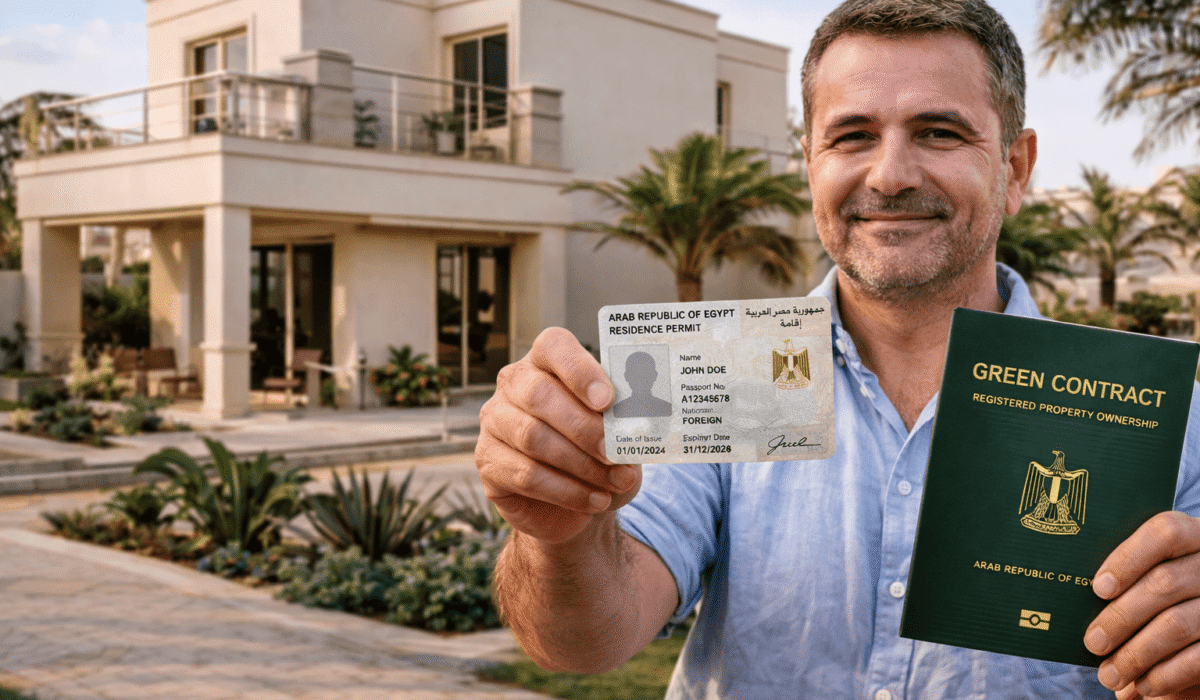



Green Contract in Egypt – How It Can Grant Residency for Foreigners
For many foreigners living in Egypt — especially those who want to stay long-term without working — one of the most powerful legal options is:
👉 Owning property with a “Green Contract” (Registered Title Deed)
This type of ownership can allow you to apply for a non-tourist residence permit with multiple entries, making it one of the most stable and flexible residency options in Egypt.
In this guide, we’ll explain everything you need to know.
What Is the “Green Contract” in Egypt?
The “Green Contract” refers to:
👉 A fully registered property ownership contract issued by the Egyptian Real Estate Registration Authority
It proves that:
- The property is legally registered
- Ownership is officially transferred
- The contract is recognized by the government
💡 It is different from:
- Contract (preliminary contract)
- Power of attorney deals
- Unregistered sales
👉 Only the registered (green) contract gives you strong legal rights.
Can Property Ownership Give You Residency in Egypt?
👉 Yes — but only under specific conditions
If you own a property in Egypt and meet certain requirements, you may apply for:
👉 Non-tourist residence permit (multi-entry)
This allows you to:
- Stay in Egypt long-term
- Enter and exit freely
- Renew your residency
Minimum Property Value Requirement
To qualify for residency through property:
👉 The property value must usually be:
💡 Important:
- Value must be documented
- Payment should be transferred from abroad
- Must be proven through official bank documents
Residency Duration Based on Property Value
In most cases:
- 🟢 $100,000 → 1-year residence
- 🟢 $150,000 → 3-year residence
- 🟢 $350,000 → 5-year residence
👉 The higher the investment → the longer the residency
Key Requirements for Property-Based Residency
To apply successfully, you typically need:
📄 Property Documents
- Green Contract (registered title deed)
- Property registration proof
💰 Financial Proof
- Bank transfer from abroad
- Currency exchange receipt
📑 Personal Documents
- Passport copy
- Entry visa copy
- Photos
- Previous residence (if any)
📋 Additional Documents
- “Negative certificate” (from real estate registry)
- Tax-related documents (depending on case)
Why the Green Contract Is Important
Without a registered contract:
👉 ❌ You cannot apply for property-based residency
Because:
- The government only recognizes official ownership
- Informal contracts are not sufficient
👉 The Green Contract = Proof of real ownership
Why Some Developer Properties Cannot Be Registered as a Green Contract
One of the most common misunderstandings among foreigners buying property in Egypt is this:
“If I buy a property from a big developer, I can automatically get a Green Contract.”
In reality, this is not always true.
Even in well-known and high-quality developments — such as projects by Orascom Development in El Gouna — many properties cannot be registered as a Green Contract.
This is not because the project is illegal.
It is mainly due to how the land and ownership structure are legally organized.
1. The Land Is Registered Under the Developer, Not Individual Units
In many large-scale developments:
- The entire land is officially registered under the developer’s name
- The project is treated as one integrated entity
👉 This means:
- Buyers own a unit within the project
- But the land itself is not legally divided into separately registered parcels
📌 Result:
Individual units are not always eligible for independent registration in the real estate registry.
2. Ownership Is Based on Contracts, Not Registered Title Deeds
When you buy from a developer, you usually receive:
- A purchase contract with the company
- Proof of payment
- Allocation of a specific unit
👉 However, this is often:
✔️ Legally valid
❌ But not equivalent to a registered ownership deed
💡 Important distinction:
- Developer contract = contractual ownership
- Green Contract = officially registered ownership
And only the second one qualifies for property-based residency.
3. Lack of “Subdivision”
For any property to be registered individually in Egypt, it must go through:
👉 Official subdivision
This includes:
- Assigning a unique property number
- Defining exact legal boundaries
- Making the unit a standalone legal entity
In many developer projects:
❌ This process is either:
- Not completed
- Not available for individual units
- Or not intended by the developer
📌 Without subdivision →
👉 No separate registration → No Green Contract
4. Development Model vs Traditional Ownership
Large developers often follow a different model:
👉 Project-based ownership model
Instead of:
- Selling fully registered standalone properties
They:
- Develop and manage entire communities
- Keep legal control over land structure
- Sell usage/ownership rights within the project
💡 This is common in:
- Gated communities
- Resorts
- Integrated destinations
👉 It’s a valid and widely used model —
but it does not always support Green Contract registration.
5. Legal and Administrative Restrictions
In some areas, especially tourism-focused zones:
- There may be restrictions on individual registration
- Or additional approvals required
- Or limitations related to foreign ownership
👉 These factors can make it more difficult or impossible to issue a Green Contract for certain units.
6. The Developer May Not Offer Registration as an Option
In some cases:
👉 The developer simply does not provide a path to registration.
This can be due to:
- Internal legal structure
- Project design
- Long-term operational control
📌 So even if you are willing to register:
👉 The option may not exist.
The Most Important Point
👉 Having a valid purchase contract does NOT guarantee that you can obtain a Green Contract.
This is the key misunderstanding many buyers face.
What This Means for Residency
If your goal is:
👉 Getting residency through property ownership
Then:
- A developer contract alone is not enough
- You must have a registered property (Green Contract)
Otherwise:
👉 You will not qualify for property-based residency
What You Should Always Ask Before Buying
Before purchasing any property in Egypt, always confirm:
- Can this unit be registered in the real estate registry?
- Is a Green Contract possible for this property?
- Has subdivision (فرز وتجنيب) been completed?
- Is the land already registered or still under development structure?
💡 These questions can save you from major problems later.
Step-by-Step: How to Get Residency Through Property
Step 1: Buy the Property
- Choose a legal property
- Verify ownership status
Step 2: Register the Property
- Complete official registration
- Obtain Green Contract
Step 3: Transfer Funds from Abroad
- Send money through bank
- Keep proof
Step 4: Prepare Documents
- Passport copies
- Property documents
- Bank proof
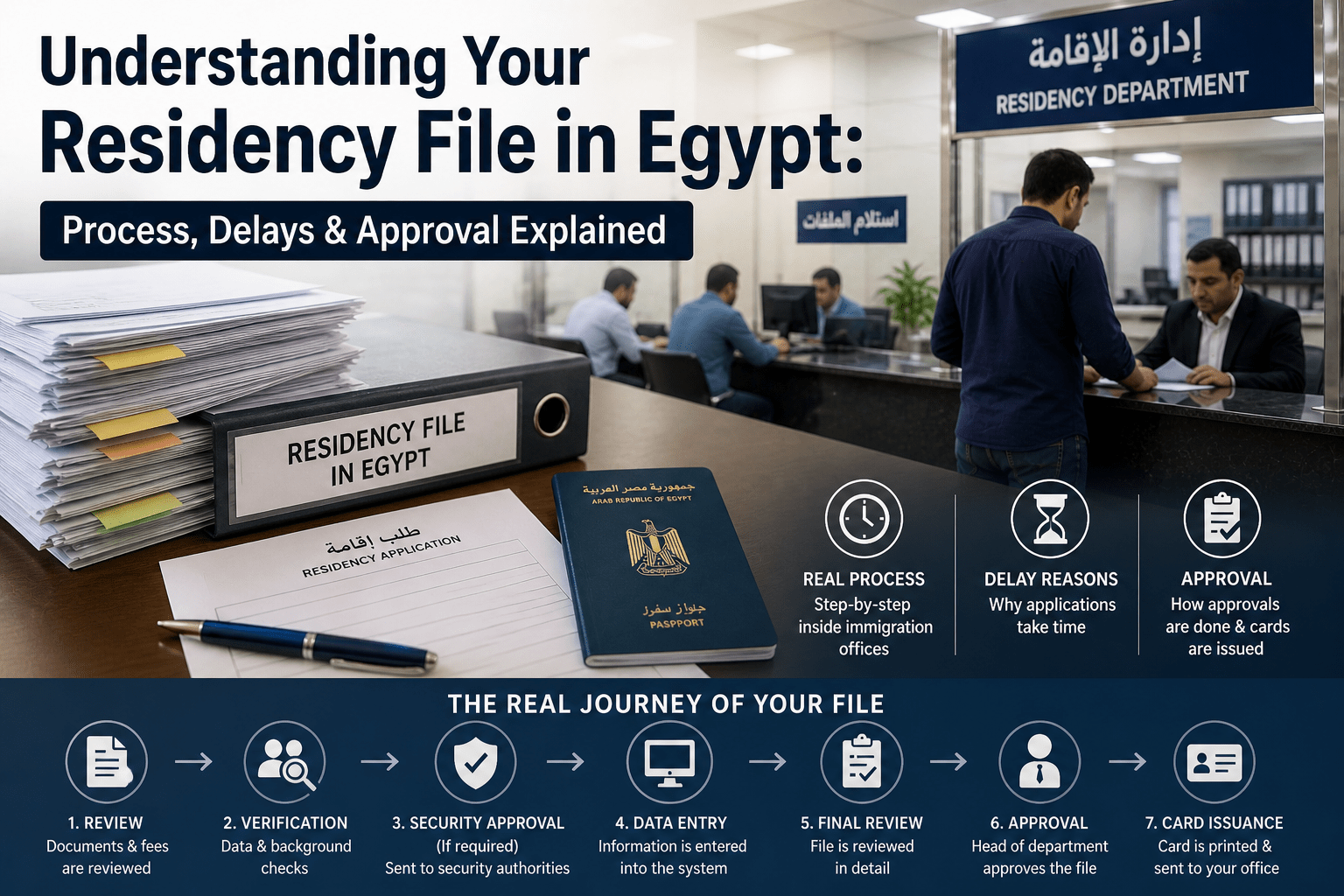
Step 5: Apply at Immigration Office
- Submit application
- Wait for approval
How Long Does the Process Take?
- Property registration → may take time depending on case
- Residency approval → usually a few weeks
👉 Timing varies based on:
- Documentation completeness
- Office workload
✅ Stable long-term stay
✅ Multiple entry (enter/exit freely)
✅ No need for work permit
✅ Renewable
✅ Strong legal position
Important Things Many Foreigners Don’t Know
⚠️ Not all properties qualify
Some units are not fully registered
⚠️ Preliminary contracts are not enough
Only Green Contract works
⚠️ Bank transfer is critical
Cash payments may cause issues
⚠️ Location matters
Documents must match your immigration office
Common Mistakes to Avoid
❌ Buying property without checking registration
❌ Not completing the Green Contract
❌ Paying without official transfer proof
❌ Missing required supporting documents
Is This the Best Residency Option?
👉 For many foreigners — YES
Especially for:
- Retirees
- Long-term residents
- Investors
- Remote workers
Final Advice
👉 The Green Contract is one of the strongest legal tools for foreigners in Egypt.
But:
✔️ It must be properly registered
✔️ Documents must be complete
✔️ Process must be followed correctly
If done right —
👉 It gives you long-term stability and legal peace of mind
FAQ
Can I get residency without a Green Contract?
Usually no — registration is required.
Is $100,000 mandatory?
Yes, it is the minimum threshold in most cases.
Can I sell the property later?
Yes, but your residency status may be affected.
Is the residency permanent?
No — but it is renewable.
Green Contract in Egypt – How It Can Grant Residency for Foreigners
For many foreigners living in Egypt — especially those who want to stay long-term without working — one of the most powerful legal options is:
👉 Owning property with a “Green Contract” (Registered Title Deed)
This type of ownership can allow you to apply for a non-tourist residence permit with multiple entries, making it one of the most stable and flexible residency options in Egypt.
In this guide, we’ll explain everything you need to know.
What Is the “Green Contract” in Egypt?
The “Green Contract” refers to:
👉 A fully registered property ownership contract issued by the Egyptian Real Estate Registration Authority
It proves that:
💡 It is different from:
👉 Only the registered (green) contract gives you strong legal rights.
Can Property Ownership Give You Residency in Egypt?
👉 Yes — but only under specific conditions
If you own a property in Egypt and meet certain requirements, you may apply for:
👉 Non-tourist residence permit (multi-entry)
This allows you to:
Minimum Property Value Requirement
To qualify for residency through property:
👉 The property value must usually be:
💡 Important:
Residency Duration Based on Property Value
In most cases:
👉 The higher the investment → the longer the residency
Key Requirements for Property-Based Residency
To apply successfully, you typically need:
📄 Property Documents
💰 Financial Proof
📑 Personal Documents
📋 Additional Documents
Why the Green Contract Is Important
Without a registered contract:
👉 ❌ You cannot apply for property-based residency
Because:
👉 The Green Contract = Proof of real ownership
Why Some Developer Properties Cannot Be Registered as a Green Contract
One of the most common misunderstandings among foreigners buying property in Egypt is this:
“If I buy a property from a big developer, I can automatically get a Green Contract.”
In reality, this is not always true.
Even in well-known and high-quality developments — such as projects by Orascom Development in El Gouna — many properties cannot be registered as a Green Contract.
This is not because the project is illegal.
It is mainly due to how the land and ownership structure are legally organized.
1. The Land Is Registered Under the Developer, Not Individual Units
In many large-scale developments:
👉 This means:
📌 Result:
Individual units are not always eligible for independent registration in the real estate registry.
2. Ownership Is Based on Contracts, Not Registered Title Deeds
When you buy from a developer, you usually receive:
👉 However, this is often:
✔️ Legally valid
❌ But not equivalent to a registered ownership deed
💡 Important distinction:
And only the second one qualifies for property-based residency.
3. Lack of “Subdivision”
For any property to be registered individually in Egypt, it must go through:
👉 Official subdivision
This includes:
In many developer projects:
❌ This process is either:
📌 Without subdivision →
👉 No separate registration → No Green Contract
4. Development Model vs Traditional Ownership
Large developers often follow a different model:
👉 Project-based ownership model
Instead of:
They:
💡 This is common in:
👉 It’s a valid and widely used model —
but it does not always support Green Contract registration.
5. Legal and Administrative Restrictions
In some areas, especially tourism-focused zones:
👉 These factors can make it more difficult or impossible to issue a Green Contract for certain units.
6. The Developer May Not Offer Registration as an Option
In some cases:
👉 The developer simply does not provide a path to registration.
This can be due to:
📌 So even if you are willing to register:
👉 The option may not exist.
The Most Important Point
👉 Having a valid purchase contract does NOT guarantee that you can obtain a Green Contract.
This is the key misunderstanding many buyers face.
What This Means for Residency
If your goal is:
👉 Getting residency through property ownership
Then:
Otherwise:
👉 You will not qualify for property-based residency
What You Should Always Ask Before Buying
Before purchasing any property in Egypt, always confirm:
💡 These questions can save you from major problems later.
Step-by-Step: How to Get Residency Through Property
Step 1: Buy the Property
Step 2: Register the Property
Step 3: Transfer Funds from Abroad
Step 4: Prepare Documents
Step 5: Apply at Immigration Office
How Long Does the Process Take?
👉 Timing varies based on:
Advantages of Property-Based Residency
✅ Stable long-term stay
✅ Multiple entry (enter/exit freely)
✅ No need for work permit
✅ Renewable
✅ Strong legal position
Important Things Many Foreigners Don’t Know
⚠️ Not all properties qualify
Some units are not fully registered
⚠️ Preliminary contracts are not enough
Only Green Contract works
⚠️ Bank transfer is critical
Cash payments may cause issues
⚠️ Location matters
Documents must match your immigration office
Common Mistakes to Avoid
❌ Buying property without checking registration
❌ Not completing the Green Contract
❌ Paying without official transfer proof
❌ Missing required supporting documents
Is This the Best Residency Option?
👉 For many foreigners — YES
Especially for:
Final Advice
👉 The Green Contract is one of the strongest legal tools for foreigners in Egypt.
But:
✔️ It must be properly registered
✔️ Documents must be complete
✔️ Process must be followed correctly
If done right —
👉 It gives you long-term stability and legal peace of mind
FAQ
Can I get residency without a Green Contract?
Usually no — registration is required.
Is $100,000 mandatory?
Yes, it is the minimum threshold in most cases.
Can I sell the property later?
Yes, but your residency status may be affected.
Is the residency permanent?
No — but it is renewable.
If you are a foreigner living in Egypt and you…
Read MoreGreen Contract in Egypt – How It Can Grant Residency…
Read MoreEverything Foreigners Need to Know to Stay Legal in…
Read MoreWhat Immigration Officers Don’t Tell You (But You Should…
Read MoreHow well this mistaken ideas off denouncing pleasure & praisings…
Read More